INFORMÁCIÓ ÉS AJÁNLATKÉRÉS
INFORMATION AND QUOTATION
Vissza
Home > News > Do we need large glass surfaces everywhere?

Do we need large glass surfaces everywhere?

Reynaers-hifinity-minimal-interior-kitchen-glass-frame-sliding-door-luxury
2023 / 03 / 30

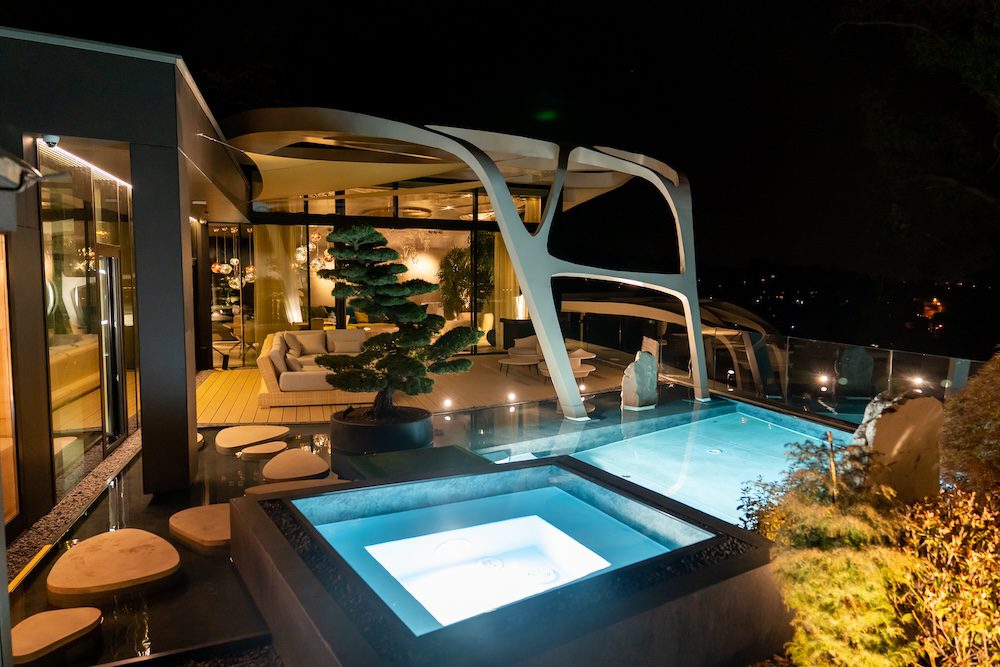
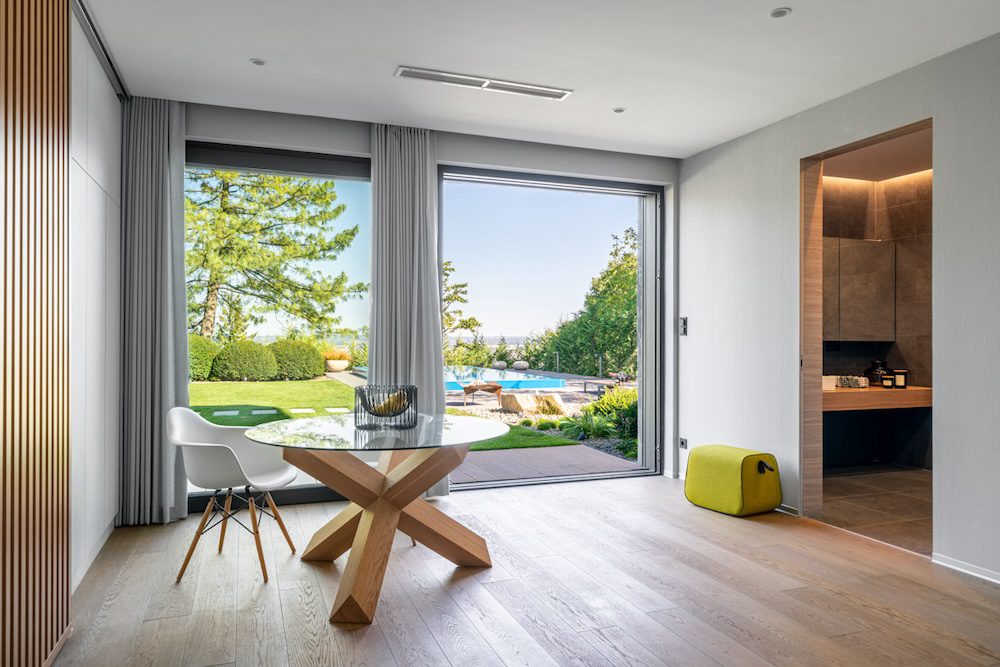
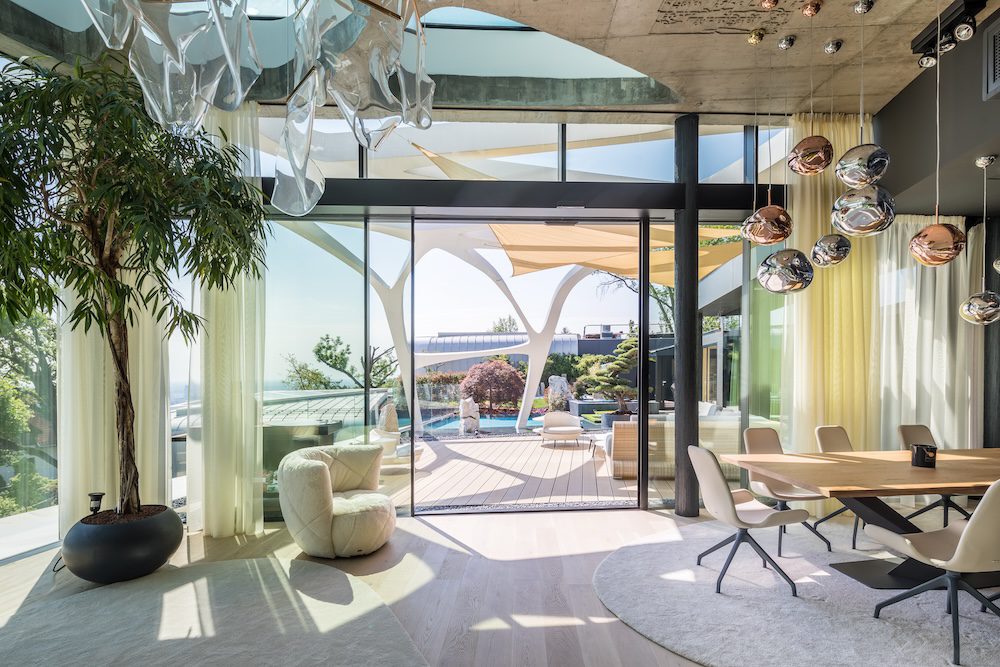
Our colleagues are increasingly encountering residential building plans in which large glass surfaces dominate. These concepts are understandable not only from a design perspective but also because of transparency, connection with the environment, and the continuous influx of light. However, in many cases, they cannot be realized, or they require significantly higher investments and more complex alterations to the plans. In our new series, we explore the topic of the dimensions of glass surfaces with Mr. Károly Lovász, the CEO of KAV, and Mr. Csaba Mravik, the Chief Development Engineer.

Many people desire vast glass surfaces in their homes, but what are the installation limitations for these?

Károly Lovász: One could even say that success and glass are kindred spirits: they have no secrets but rather a price. When an architect designs a critically large glass surface, the client typically agrees, as it’s hard to imagine something more stylish and cool. However, when they begin to examine the project from a cost perspective, such as when a villa project progresses to the point of tendering for general contractors, they attempt to address the issue of glass surfaces by directly contacting window manufacturers. For large glass surfaces, PVC window manufacturers are not suitable, so they invite wood or aluminium companies. In the case of significantly large glass, wood system specialists usually opt-out because they cannot (or do not want to) handle curtain walls, shaped glass roofs, or 700-800 kg sliding doors. Among aluminium manufacturers, there are two types of companies: one starts breaking down the integrated surfaces and tries to solve them somehow with their own resources, while the other – mainly companies like ours – organizes the preparatory design and the resulting calculations in a way that we can actually apply those large glass surfaces.

In such tasks, what challenges do you typically face, and what are the plans like?

K.L.: We often encounter situations where an architect designs a glass surface, but without expert consultation, they do not thoroughly consider the background aspects – such as sun protection, manufacturability of glass panels, glass statics, and sizing. They delegate the solution to the general or specialized contractor. I could quote Professor György Stocker, who stated that in his experience, for example, insulation planning tasks are always subcontracted by architects, but among façade elements, glass structural design – which is similarly heat-insulating, airtight, watertight, and part of the façade material – is not budgeted for. I think this is one of the biggest professional mistakes, and it leads to most of the problems that arise. After all, system designers can create real nodes, think through the glass surface receiving structure, size the glass panel based on statics, manufacturability, or even transportability. We are currently executing a villa building for a returning client with two-story, six-meter-high glass elements erected on the edge, so the “U”-shaped living room is encircled by panels measuring 2.4 x 6 meters. Such glass surfaces require not only expertise in handling but also in background structure, glazing, and crane operations. They are not made from standard materials because you cannot install 1.5-ton glass panels in a conventional curtain wall.

Why is that?

K.L.: Because standard curtain walls designed for municipal buildings are sized for smaller glass surfaces and smaller glass panel weights. Therefore, you need to apply a solution that increases the load-bearing capacity of the framework, while it can also accommodate the depth of a triple-pane glass panel. This is a matter of specialist design. When an architect wants this type of solution, it would be important to hand over the task to a glass structure designer because when a “window specialist” enters the process, it’s often too late. The client has already accepted and fallen in love with the window size, and the architect is unwilling to deviate from their concept. Our engineers come up with a solution, we provide the price, but the client cannot afford the implementation, and unfortunately, in most cases, they don’t understand this rather sensitive situation. We need to get involved in these projects sooner, and then we could jointly design glass fields that fit within the budget and can be realized in both production and installation.

Csaba Mravik: In many cases, I also notice that these plans are born out of misinformation. The client sees a house with huge glass surfaces online and formulates this as a requirement. When we inquire further, asking where they saw it, how thick the glass was, or if there was any shading, they often cannot provide answers. In such cases, we have to explain that this could be achieved with single- or double-pane glass, but with triple-pane glass – which is necessary due to our climate – it becomes so heavy that it cannot be manufactured or installed with standard elements. Of course, the solution could be to compromise on aesthetics and size in favor of thermal performance, but in such cases, the house may receive a worse energy rating… We often experience that during the design phase, factors such as transport, organization, and associated costs are omitted. The transport of a large glass surface must be addressed; the design should consider whether the site’s conditions allow for delivery – can a truck reach it, what overhead cables or underpasses might obstruct it, and can the glass be lifted by crane? Moreover, the risk of breakage should be assessed, and contingency plans made in case the glass breaks. It’s important to take these aspects into account during the design phase.


Do we need large glass surfaces everywhere?
01
00
Üvegcsere-némi-organizációs-kihívással
MoreNews
01
020
2019 / 03 / 13
Reynaers-alumínium-nyílászáró-tolóajtó-emelő-toló-ajtó-minimál-homlokzat-lézervágott-lemez-burkolat-terasz-kert-kapcsolat-üveg-építészet-exterior-night
The evolution of closing systems in Hungary
If one spends many years in a specialised technical segment, sometimes answering questions from a professional interviewer will inadvertently recall the period from the beginning to the present. Studying the evolution of window and door products used in residential buildings is also instructive, because fashion always changes along with demand and financial opportunities. Everyone sees the past differently - we, Hungarians are special in this - but sales figures outweigh perceptions.
Show more
2016 / 01 / 01
KAV-Hungária-Alumínium-nyílászáró-gyártás-üzleti-etikai-díj-2016
A Business Ethics Prize is granted to KAV Hungária
Responsible thinking became a winner
Show more
2017 / 08 / 17
Investors-In-People-2o17-Magyarország-KAV-Hungária-kft-díjátadó
KAV, as a small enterprise, sets a brilliant example
Already more and more managers in Hungary recognise that an excellent company can only be built based on its employees. Investors in People Hungary aims to support companies with outstandingly good practices in organisational development and to set them up as example for the other actors in the economy.
Show more
2020 / 01 / 24
Schuco-aluminium-18-PD-FW50-exclusive-window-sliding-door-glass-roof-interior4
KAV and Porsche design
Taste of life, reliability, design and functionality. These were the buzzwords for designing the minimalist style house, the owner of which followed F. A. Porsche's philosophy.
Show more
2018 / 09 / 26
Schüco-alumínium-tolóajtó-PD77-frameless-keret-nélküli-üveg-üveg-sarok-minimal-design-nappali-beltér-interior-2
Windows in the service of maximising the view
Frameless windows are favourite elements in houses built in modern and minimalistic styles, since, thanks to the nearly invisible frames, the external and internal spaces almost connect; in this way, nothing disturbs the view, and also natural light may flow into residential spaces through a greater surface.
Show more
2018 / 12 / 19
Hamburg-ALUTA-szakmai-tanulmányút-épület-látogatás
Old buildings with a new function
Hamburg, the third busiest port town in Europe, was the destination of the professional trip organised for ALUTA (aluminium window and facade association) members, on which László Cserki and Károly Lovász represented KAV Hungária. We had a conversation with Károly Lovász about the German town’s urban and architectural concepts and one of the newest emblematic buildings of Europe, the Elbphilharmonie.
Show more
2022 / 07 / 04
JANSEN-acél-nyílászáró-homlokzat-ablak-íves-hőhídmentes
The Application Possibilities of Steel Windows and Doors in Family Homes
With the changing architectural trends in residential buildings, larger glass surfaces are becoming increasingly prevalent in properties, while the size requirements of frame structures are decreasing. As a result, the use of steel windows and doors, which were previously mainly present in communal construction culture, is now being considered more frequently. We spoke with Mr. Károly Lovász, the Managing Director of KAV Hungária, to discuss when it is advisable to choose steel windows and doors instead of aluminum ones and what this product category has to offer.
Show more
2019 / 01 / 28
Schüco-ASE-67-PD-keret-nélküli-tolóajtó-rendszer-vízszintes-metszet
What direction will the construction industry take?
Report on the BAU MESSE exhibition in Munich
Show more
2019 / 08 / 29
Schüco-alumínium-keret-nélküli-tolóajtó-frameless-slide-door-porsche-design-PD77-minimal-house-exterior-lemezburkolat-lemez-homlokzat-panel
For a smart home, product selection is key
For a newly built property, in terms of windows and doors, one of the most important questions is whether prospective residents would like a building management system in the house, as all solutions need to be tailored to this in the design phase. For today's systems, system-specific connector units and auxiliary modules must already be planned and positioned so that they can remain completely hidden.
Show more
2021 / 04 / 22
Schüco-alumínium-erkélyajtó-ablak-ü
ALUMINIUM DOORS AND WINDOWS AND THE KAV HOME
For a long time, aluminium doors and windows were just the privilege of communal buildings, offices and the exclusive family home market. KAV Home was created to provide a value-for-money solution for customers who have never dared to dream of aluminium doors and windows. Trends and solutions are also available with these products, which are very well adapted to the customer’s needs.
Show more
2019 / 10 / 03
Ádám-István-Alukönigstahl
We make our decisions based on local characteristics
Our cooperation is very good, and I think it is very important that both sides work transparently. You have to think of it as shared engineering thinking and a creative process as we work together.
Show more
2019 / 05 / 22
wind-pressure-is-the-biggest-challenge-for-doors-and-windows-designed-for-iceland
Wind pressure is the biggest challenge for doors and windows designed for Iceland
Our company, is involved in the doors and windows solutions of the Marriott Hotel, being built near Harpa, one of the symbolic buildings of Reykavík. The Icelandic architecture and the weather conditions on the island require different systems from the ones we are used to at home, so the KAV team has also built a prototype for this work, taking into account, among others, the installation and insulation aspects. Details were given by Norbert Kiss, architect consultant and Csaba Mravik, chief development engineer.
Show more
2021 / 07 / 21
kisber-uzem-kav-hungaria
Production of custom doors and windows at the KAV plant
Most domestic companies selling aluminium doors and windows do not have their own production capacity. However, in KAV's imposing manufacturing plant, they are able to resolve even seemingly impossible profile connections. This is where further thought-out versions of Schüco or Reynaers profile elements and completely unique door and window solutions are manufactured, designed and developed by KAV engineers. We talked to Albert Herbut, the head of KAV's Kisbér plant, about the production processes and the operation of the plant.
Show more
2021 / 05 / 21
Lovász-Károly-KAV-Ügyvezető
Aluminium doors and windows with custom solutions
The founding of KAV Hungária was also triggered by an innovative idea: why not introduce aluminium doors and windows to the family home market? Since then, our own developments, individual solutions, needs assessment and construction work organisation have become the defining elements of the company. Károly Lovász, the managing director of KAV, Gábor Csóti, the founder of the Gamechangers community and Kálmán Szabó, the host of the podcast by the Association for Excellence Public Benefit Association, spoke about innovation, the underlying managerial thinking and organisational structure.
Show more
2023 / 01 / 02
Schüco-alumínium-emelő-toló-harmónika-ajtó-étterem-terasz-kapcsolat-homlokzat-sas-baba
A communal gastronomic space where the fusion of outdoor and indoor is facilitated by KAV glass portals
BABA Budapest is not merely a restaurant; it is a space where one can feel at home throughout the day. The main principles of design focused on the seamless transition between indoor and outdoor spaces and the creation of a genuine sense of community experience. We had the opportunity to discuss the BABA with its lead designer, Dóra Fónagy, while sitting at one of its tables, and during our conversation, we ourselves experienced why it provides a truly unique experience.
Show more
2021 / 08 / 18
Lovász-Károly-KAV-Hungária
Impact of construction industry changes on the market for aluminium doors and windows
In the recent period, price increases and a shortage of raw materials have brought along significant changes in the construction industry. We discussed with Károly Lovász, Managing Director of KAV Hungária, how this affects the market for aluminium and custom doors and windows, and what KAV's customers should be prepared for.
Show more
2021 / 01 / 06
With unique windows to Norway
Aluminium windows and doors also play a prominent role in Norwegian architecture, not only in public construction, but also in residential buildings and condominium investments. The long-term goal of KAV is, after Iceland, to gain experience in Norway, so it applied for admission to the Hungarian-Norwegian Chamber of Commerce (MNKK). We talked about the possibilities with the founder of the chamber, Klára Jankovics, and Beatrix Kosztyi, foreign economic attaché, the secretary-general of the chamber
Show more
2023 / 04 / 26
Schuco-aluminium-nyilaszaro-karbon-elleni-harca-2023
BAU FAIR 2023: The Battle of the Construction Industry Against Carbon
The "BAU 2023" construction industry trade fair took place in Munich from April 17 to 22, 2023. This exhibition is the largest and most significant construction industry event in Europe, providing guidance every two years on planning and construction technologies, building material production, and installation techniques. KAV Hungária sent eight engineers to Germany to process the valuable information and reconsider their domestic and international sales strategy.
Show more
2019 / 05 / 16
Reynaers-aluminium-emelo-tolo-ajto-ablak-uveg-homlokzat-burkolat-Schlotterer-92Z-Raffstore-zsaluzia-minimal-house-terasz-lepcso-gyep-kert-kulter-exterior
The evolution of blinds
Climate change and increasingly sophisticated customer demands have accelerated the evolution of shading systems, not just of windows and doors. While in the past the goal was complete darkening, nowadays light control and maximum transparency are the main considerations. Thanks to this, most client choose lamellar and textile shadings.
Show more
2022 / 09 / 22
Schuco-aluminium-emelo-tolo-erkelyajto-ajto-ablak-nappali-dolgozo-szoba-uveg-epiteszet-minimal-house-belter-interior
The Basics of Doors and Windows – A Conversation with Architect György Hoffmann
Huge, transparent surfaces that create almost a direct connection with the surroundings. Architect György Hoffmann believes that in modern architecture, there is no longer a need for walls, as windows and pillars can also fulfill the structural functions. Our conversation also reveals what primarily influences the thinking of architect-designers and what it takes to establish a common language between the client and the designer.
Show more