INFORMÁCIÓ ÉS AJÁNLATKÉRÉS
INFORMATION AND QUOTATION
Vissza
Home > News > The architectural design of glass structures demands special expertise

The architectural design of glass structures demands special expertise

Stocker-György-BME
2022 / 08 / 18

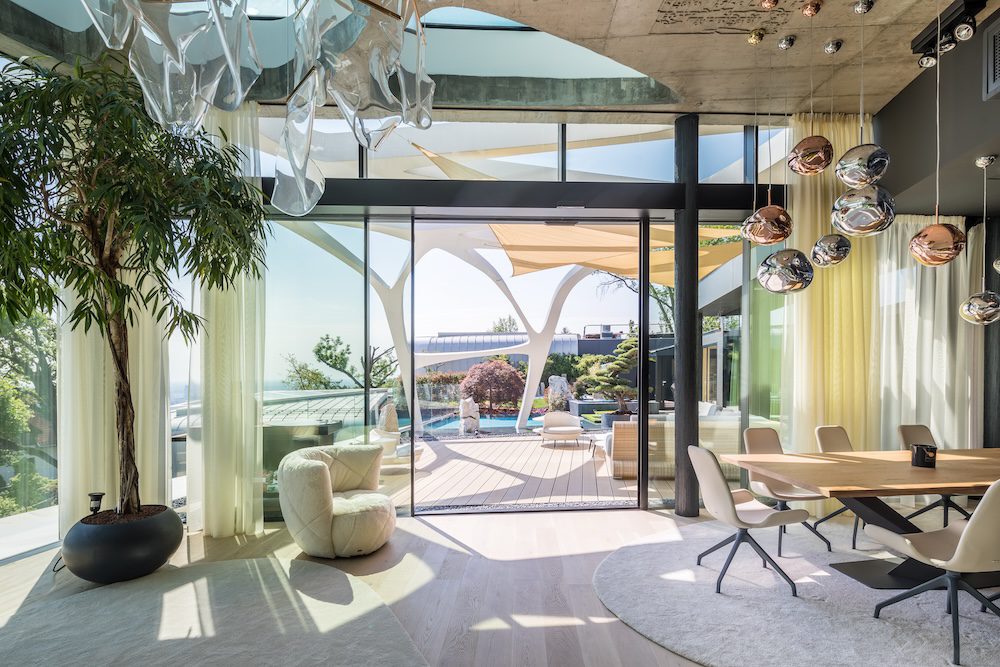
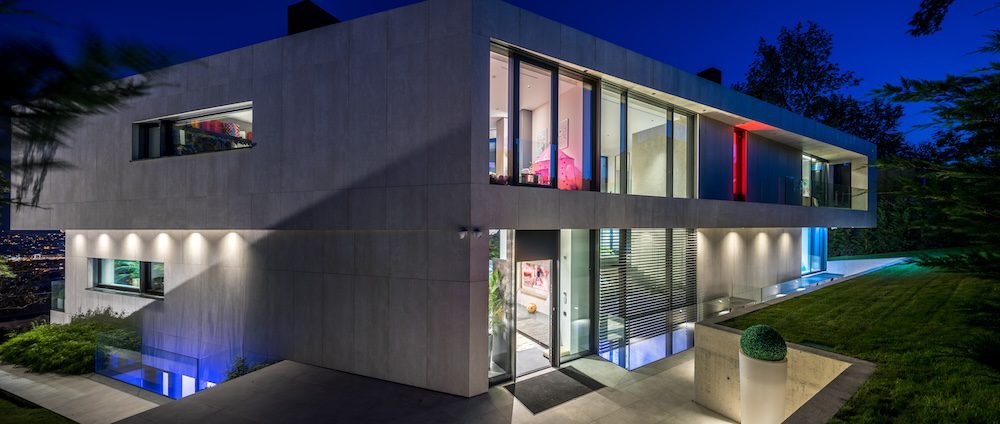
Although one of the most modern façade elements is glass, numerous problems can arise during the design process if the glass structures used have not been properly thought through. As to what makes these glass structures special, and why it is important for competent sector designers to deal with these building elements even during planning, we spoke with chartered architect György Mihály Stocker, reader in the BUTE Faculty of Civil Engineering, and vice-president of ALUTA.
If we are talking about glass structures and glass as a material, what is the first thing that you usually pass on to your students?

In the university, in the introductory lecture to the subject dealing with the design of glass structures, I always tell them that one of the modern façade elements in our days is glass. It is a very grateful material, as it may be shaped almost arbitrarily, it provides transparency, and it is recyclable. In connection with the use of glass structures, however, there is a great contradiction. Architects strive for transparency, so they would like to use as large a glass surface as possible. But the larger a glass surface is, the greater the problem. Due to solar exposure, the question of shading arises. True shading is always located on the external side, preventing the energy resulting from sunshine, as well as the powerful light effect causing glare, from getting into the interior space. Due to this, the glass surfaces practically disappear; when the shades are lowered the building is given a new architectural appearance. Fortunately, glass manufacturers have set out in the direction of developing tinted glass. Of course, this has its difficulties too. It is like looking at the world through sunglasses. The protection is provided by a very fine coating of a metallic nature. This discolours the glass, so the light transmission is reduced and at the same time the refection from the outer side of the glass is increased, it will glint.

Besides this, in my lectures I always touch on load-bearing glass structures too. These work like secondary load-bearing structures in the façade. In this case, the glass structure is not only the shell of the building, the external delimitation, but it also shores up the building. We are working on constructing buildings like this now, several projects have already been completed with the concept.

What types of structures provide the load bearing in these? And how should an architect relate to the design of these?

Glass beams and glass support structures are produced for these buildings, which in general are clear glass, so the shading problem mentioned above does not arise. The shell framework, however, which these are added to, does cause trouble. I always say that today, architects should actually be polyhistors. They should be familiar with all the materials to be used in the building in sufficient depth, in order to add them to the design properly. Today, architects have the practice of assigning the various insulations, water, groundwater, soil moisture, other insulations, which get into the ground, they always assign those to special sector designers. Well yes, but in connection with glass structures, which is likewise a special topic, this is not the case. They try to solve the problems themselves, though this structure is more than a water insulation. It works as a facing, as water insulation, and it is also airtight, but what is most important, it has a special aesthetic, which can be implemented in many ways in knowledge of the material. The water insulation in the ground cannot be seen, it has no aesthetic. Glass structures are especially important architectural elements in our buildings, but architects try to “mess about” with them themselves, instead of consulting with or assigning them to a specialist designer. This is also why architects and engineers would need a special course. Within the civil engineering faculty I am “spreading the word”, which has also had certain results, as maybe only a few, but some of the final year students have found jobs with glass structure manufacturers and processors, where they can actually do useful work and they can collaborate efficiently in the production of these special structures.

Employees of KAV have often experienced that even for exclusive family homes, they are given design materials which as far as glass structures, windows and doors are concerned, they do not reach the standard otherwise represented by the house. Could the reason for this be, what you just mentioned?

Yes, the reason for this is that during planning, these is no competent expert who can deal with this subject in greater depth. No associate designer with special technical skills is involved. Let’s not go into the matter of load-bearing glass structures now, as even when designing a normal curtain wall, questions may arise in which competent decisions must be made. Today there is the practice that architects approach various system distributors at such times, and ask them for advice and help even in such questions as sizing the necessary structures, rib depth, rib thickness. This should not be a job for a system distributor, but for a sector designer, of which there are still only a few at the moment. You have to understand the architect’s thinking, what he would like to achieve with the given façade.

Or, that the design concept should not be damaged by incorporating certain glass surfaces?

Exactly. Practically, this is the other important thing I have to say to my present engineer colleagues. It is important for them to be familiar with the various structures, but you have to go further, they have to understand architectural thinking in order to be able to help during planning. There are several system distributors working in Hungary, and you have to be able to choose from them, which one is suitable for the solution, which one can best help the appearance thought out by the architect. It is real art. During my career as a teacher, one of the most important things to say has always been that a building will only be good if the architect’s conception can be helped by the support structure designer, the electrics designer, the façade designer, and so on. The other important thing is construction, when a building comes to fruition. Experts who collaborate in implementation come from two Faculties of the Budapest University of Technology and Economics: the Faculties of Civil Engineering and Architecture. For implementation, it is also necessary to understand the architect’s conception in depth. For instance, you have to be able to read a drawing. After all, what is our common language? The drawing! Today, everyone works on computers. There is one problem with this, the computer is very rigid, but precise. I usually say that I am accredited up to A3, so I produce A3 drawings by hand, these are worked out by my colleagues, which often takes significantly longer than working out the idea with freehand drawing.

If we are talking about designing and the design process. What do you think determines freedom of design in Hungary today? The site, the customer’s requirement, market trends…

In Hungary, the budget most of all. But it is precisely the designer’s freedom to always find the appropriate configuration within the given limits. In today’s architecture, every architect is striving for self-fulfilment, which is a good trend, everyone would like to design a good, unique building, architecturally thought out. It is important to actualise a fine architectural conception, but it is not certain that a given architect is able to assess the financial impact. Planning to a given historical cost is very, very difficult, particularly in today’s world. It is a fine art. Furthermore, I think that Hungarian architects are as good as the foreign ones. Very fine buildings are also built to Hungarian designs, and we also see that there are foreign star architects, whose work is not certain to be going in the best direction. Of course, the opportunities for foreign experts may often exceed those of a Hungarian. It is also general experience, that if a foreign architect is operating in this country, the investor doesn’t really try to curtail his thoughts, in contrast to a Hungarian architect. With the House of Music I had a first experience, which is a rarity: with the aid of the Client, the project developed further in terms of the glass structures. It did not stay within the Hungarian construction budget, but exceed it. For this, the Developer/Client had to realise that a much greater building would be the result, if it became the structure which was finally executed. I tracked and helped with this building as expert designer from the beginning. At the beginning, the primary consideration was for us to take Hungarian manufacturing options into account. Finally this had to be let go, so that the presently visible solution could be realised. But, for instance, there is the Hungarian designed Museum of Ethnography, which is just as unusual a structure as the House of Music. In order for buildings of such a standard to be constructed, an architectural conception is not enough, it is also important to bring in expert designers and for the developer/client to have an open mind.

The architectural design of glass structures demands special expertise
01
00
Stocker-Gyorgy-BME
Stocker-Gyorgy-BME
MoreNews
01
020
2020 / 10 / 01
Schuco-aluminium-emelo-tolo-erkelyajto-ajto-ablak-nappali-uveg-epiteszet-minimal-house-belter-interior
Frameless sliding door structures with an architect’s eye
Each project poses a different challenge to architects and to door and window professionals as well. One of our reference concepts is based on the unlimited view created by the wing-opening roof and the space stretched by the floor. Filigree division solutions, as well as frameless sliding mechanisms, were the main solution to achieve maximum transparency. We talked to the architect Orsolya Glavanovics about the issues raised by the aluminium door and window solutions implemented during the design and construction, who the Myd-II Interior Design Stúdióval planned it jointly, house operating on this for the special fenestration solutions.
Show more
2017 / 10 / 26
Schuco-aluminium-ablak-emelo-tolo-ajto-alakos-geometria-fuggonyfal-homlokzat-burkolat-ferde-teto-burkolat-uveg-epiteszet-kulter-exterior
KAV received an ALUTA Award of Excellence again
In the “Small project” (i.e. residential building) category KAV received the 2017 ALUTA Award of Excellence for the special facade of its Zugliget family home reference, for its engineering work and implementation.
Show more
2018 / 10 / 10
Költő-Kert-alumínium-keret-nélküli-tolóajtó-rendszer-Schüco-77-PD-HI-render-Budapest-minimal-house-2
When a dreamt-of work of art becomes a reality
Properties being created in an ongoing KAV project may nearly be interpreted as works of art. No company with relevant references could be found, either in Hungary or abroad, for the implementation of buildings that were considered unique at the European level too. We talked about this special job with Mihály Fodor, the Managing Director of the implementing company, and András Havasy, the project’s Technical Director.
Show more
2021 / 07 / 08
Aluta-Nívódíj-2021-KAV
KAV was given an award in the aluminium door and window small project category
This year, the Aluminium Window and Façade Association (ALUTA) awarded its prizes again. KAV’s work was again given an award in the small project category, with the only prestigious recognition by the Hungarian aluminium door and façade manufacturers.
Show more
2017 / 12 / 20
Ethical operations raise even SMEs to the top
Following the large enterprise sector, operating ethically is becoming increasingly important for small and medium-sized enterprises, too. These companies not only take into account the interests of their clients and suppliers but also those of their environment and employees. They set an example by their activity and attitude and strengthen trust. This attitude may constitute a basis for long-term operation and economic stability, and what is more, employees of the Y and Z generations are more eager to opt for an ethically operating workplace.
Show more
2018 / 06 / 11
KAV also helps the work of architects
From now on, KAV assists the work of architects with a complimentary consulting service. This is because, closing systems are such special structural elements that their thorough knowledge and following the trends is nearly impossible for those not specialised in this field. Now architects may ask their questions of Norbert Kiss, who worked as a designer for a long time himself, and now he has been strengthening the KAV team for years.
Show more
2022 / 02 / 08
Alukönigstahl-alukoenigstahl-ungarn-Eiles-Károly-
THE MARKET SHARE OF ALUMINIUM WINDOWS AND DOORS IS CONTINUOUSLY INCREASING IN RESIDENTIAL PROJECTS
The market share of aluminium and steel doors and windows in Hungary is constantly increasing with regard to single-family home projects as well. However, even in this stable market, the year 2021 introduced a number of unexpected situations: cancelled professional events, shortages of raw materials and supply chain disruptions. We spoke to Károly Eiles, the company's investment and general contracting consultant, about the impressions with which Alukönigstahl Kft. (the distributor of Schüco and Jansen systems in Hungary) closed this challenging year.
Show more
2019 / 05 / 22
wind-pressure-is-the-biggest-challenge-for-doors-and-windows-designed-for-iceland
Wind pressure is the biggest challenge for doors and windows designed for Iceland
Our company, is involved in the doors and windows solutions of the Marriott Hotel, being built near Harpa, one of the symbolic buildings of Reykavík. The Icelandic architecture and the weather conditions on the island require different systems from the ones we are used to at home, so the KAV team has also built a prototype for this work, taking into account, among others, the installation and insulation aspects. Details were given by Norbert Kiss, architect consultant and Csaba Mravik, chief development engineer.
Show more
2023 / 01 / 26
Schüco-alumínium-tolóajtó-ablak-emelő-toló-KAV-üveg-üveg-sarok-Schlotterer-80D-raffstore-minimal-house-kültér-udvar-terasz-exterior-4
The issue of shading is becoming increasingly important
The changing economic environment and rising energy prices are also impacting the construction industry. But how might the market for premium segment windows change? According to KAV's CEO, Károly Lovász, the focus will shift towards the issue of shading, and it is crucial for builders to select companies with a stable background and a qualified workforce.
Show more
2022 / 10 / 20
Reynaers-hifinity-minimal-interior-luxury-glass-keret-nelkuli-sliding-door
Huge glass walls in a villa with breathtaking features
The glass is the soul of the villa designed by architect Péter Koch, the head of Nara Studio. The unique, distinctive building achieves its floating effect through the almost endless glass surfaces, providing the owner with a perfect panoramic view and an unparalleled sense of connection with the environment. We asked the architect about the design process of the building and the collaboration between the various aspects of the project.
Show more
2022 / 08 / 11
Schüco-alumínium-ferde-szemöldök-alakos-külső-napvédelem-nyílászáró-Schlotterer-raffstore-lamellás-árnyékoló-motoros-rejtett-geometria-exterior_
The market for shading in Hungary
Although, in the past, residential properties tended to be built in Hungary without shading, today it is a priority in the design process. Due to climate change, it is just as important for property to provide an optimal thermal performance in the summer period as it is during winter. For this reason, KAV began designing customised shading. Of course, when introducing an innovation, we need to take into account the nature of the Hungarian market. KAV’s Managing Director, Károly Lovász, talks about the most exciting developments.
Show more
2019 / 11 / 28
dubai-the-city-of-superlatives
Dubai, the city of superlatives
Dubai is now the world's fastest-growing city; one that was built up over several decades, almost from scratch. Here you will find the world's tallest building, the Burj Khalifa, 828 metres high; its airport is often called the most dynamic and artificial islands and breath-taking architectural structures attract millions of tourists to the city every year. The continuously growing Dubai will also be the venue for the 2020 Expo. This year, the professional path of the 20-year-old professional association, ALUTA, led to this metropolis presenting innovative architectural trends.
Show more
2019 / 01 / 28
Schüco-ASE-67-PD-keret-nélküli-tolóajtó-rendszer-vízszintes-metszet
What direction will the construction industry take?
Report on the BAU MESSE exhibition in Munich
Show more
2019 / 05 / 16
Reynaers-aluminium-emelo-tolo-ajto-ablak-uveg-homlokzat-burkolat-Schlotterer-92Z-Raffstore-zsaluzia-minimal-house-terasz-lepcso-gyep-kert-kulter-exterior
The evolution of blinds
Climate change and increasingly sophisticated customer demands have accelerated the evolution of shading systems, not just of windows and doors. While in the past the goal was complete darkening, nowadays light control and maximum transparency are the main considerations. Thanks to this, most client choose lamellar and textile shadings.
Show more
2018 / 12 / 19
Hamburg-ALUTA-szakmai-tanulmányút-épület-látogatás
Old buildings with a new function
Hamburg, the third busiest port town in Europe, was the destination of the professional trip organised for ALUTA (aluminium window and facade association) members, on which László Cserki and Károly Lovász represented KAV Hungária. We had a conversation with Károly Lovász about the German town’s urban and architectural concepts and one of the newest emblematic buildings of Europe, the Elbphilharmonie.
Show more
2017 / 05 / 10
Investors-In-People-2o17-Magyarország-KAV-Hungária-kft-díjátadó-csoportkép
KAV is amongst the most excellent companies in Hungary
KAV Hungária was awarded a prize in the Innovation and Ongoing Perfectioning and the Culture of Recognition categories in the Hungary’s Most Excellent Companies Award Programme.
Show more
2019 / 03 / 29
Keret-nélküli-tolóajtó-rendszer-alumínium-nyílászáró-emelő-toló-ajtó-render-épülő-ház-külső-nézet-3
A house where the doors and windows shaped the design process
What they design, they can do, they guarantee in the long run, and they can operate such a property. We can be sure that the company will not disappear.
Show more
2020 / 03 / 18
custom-windows-and-doors-beyond-the-standards
Custom windows and doors beyond the standards
Just as in many areas of the world, ‘unique’ and ‘self-expression’ are the strongest buzzwords; so change the needs of architects and developers. However, most door and window manufacturers are finding it difficult to go beyond the standard items, although this area also offers many innovations in the field of architecture when it comes to sincerely rethinking structures.
Show more
2022 / 05 / 26
Farkas-Gábor-Sika-Magyarország
Aluminium windows and doors and the gluing technique
Unique windows and doors, large glass surfaces and narrow frames would not have become part of our building culture without developments in gluing technology. We talked to Gábor Farkas, head of the industrial glue technology division at Sika Hungária Kft., about the special fixing and sealing processes and innovations that have emerged in this field over the past decade. The cooperation between KAV and Sika goes back many years. In the beginning, they only supplied sealing materials for glass-to-glass connections made on-site, but today they supply KAV's factory workers and installation team with special materials and tools, and also train our engineers.
Show more